
Garage door opens then stops or reverses? Sensor troubleshooting guide
If your garage door starts down and then goes back up, the photo-eye safety sensors are the first thing to check: a blocked beam, dirty lens, bumped bracket, or low sun in the receiving eye. That check takes about 5 minutes and is safe to do yourself. If the door stops or reverses while opening, the sensors usually aren't involved. That points to the door's balance or springs, which is a job for a pro.
Which symptom do you have?
| What the door does | Most likely cause | DIY-safe? |
|---|---|---|
| Starts closing, then reverses; opener lights flash | Safety sensors blocked, dirty, or misaligned | Yes: clear, clean, realign |
| Reverses only in late afternoon | Sun shining into the receiving sensor | Check first, then call |
| Closes only while you hold the wall button | Sensor fault (older openers allow a hold-to-close override) | Check sensors first |
| Touches the floor, then pops back up | Close limit out of adjustment, or something changed in the door | Have it checked |
| Reverses partway down with nothing in the way | Door binding: track, rollers, or a spring problem | No |
| Opens a few feet, then stops | Weak or broken spring, cable, or binding the opener senses as resistance | No |
How do garage door safety sensors work?
The two small eyes mounted low on either side of the door send an invisible infrared beam across the opening. If anything breaks that beam while the door is closing, the opener stops and reverses. Federal rules require entrapment protection on automatic residential openers manufactured for U.S. sale since January 1, 1993 (per the U.S. Consumer Product Safety Commission), and the photo-eye pair is the most common way home openers meet it. On most openers the eyes guard the closing direction only, which is why sensor trouble shows up as a door that won't close, not one that won't open.
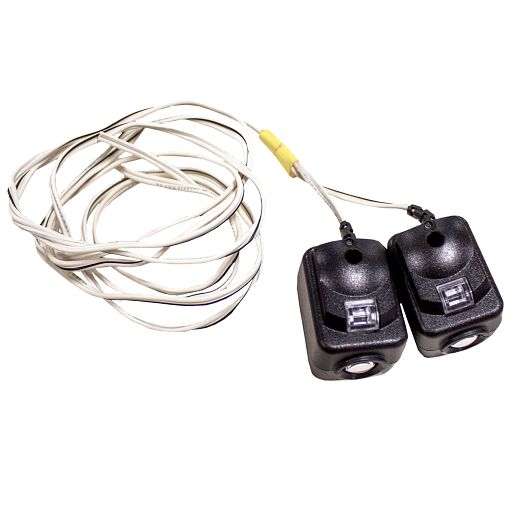
On LiftMaster and Chamberlain openers, the amber light marks the sending eye and the green light marks the receiving eye. According to Chamberlain's support documentation, the opener's main lights flash 10 times when the safety sensors are keeping the door from closing. Genie and other brands use their own light codes, so check your manual.
How do you fix garage door sensors yourself?
Work through these in order. Each one is safe, and together they take about 5 minutes:
- Clear the beam. Trash bins, bikes, boxes, a hanging rope, or a broom leaning near the track are the usual suspects. Anything between the two eyes counts.
- Clean both lenses. Wipe them with a soft, dry cloth. Dust, spider webs, and insect nests on the lens are enough to break the beam.
- Check the lights. Both should glow steadily. If the green (receiving) light is off or flickering, the eyes aren't seeing each other.
- Realign by hand. A bike handlebar or mower can knock a bracket out of line. Loosen the wing nut, aim the eye at its partner until the light glows steadily, and retighten.
- Test it. Close the door and pass a broomstick through the beam. The door should stop and reverse.
If the lights still won't go solid, look for damaged wiring along the wall: a staple driven through the wire or a nicked run is a common culprit. Wiring repair, replacement sensors, and anything inside the opener are where our opener repair service comes in.
Why does the door reverse only at certain times of day?
Sunlight. Chamberlain notes that sun shining directly into the receiving eye can drown out the infrared beam from the sending eye. In Central Texas, a garage that faces west takes low, hard afternoon sun straight through the opening, and the problem can come and go with the seasons as the sun's angle changes. If the door misbehaves only at a certain hour and works fine otherwise, sun glare is the likely cause. The lasting fix is repositioning or shading the receiving eye so it doesn't face the sun.
Chamberlain also notes that on many older units, pressing and holding the wall button lets you close the door despite a sensor fault. Openers and replacement logic boards made after February 3, 2022 no longer have that override. Treat it as a way to get the door shut tonight, not as a fix.
What if the sensors check out and the door still reverses?
Then the opener is reacting to the door itself. Modern openers also sense resistance: if the door pushes back harder than expected, the opener reverses as a second layer of protection. The usual reasons:
- Binding hardware. Bent track, worn rollers, or a dragging hinge make the door hard to move, and the opener reads that as an obstruction.
- Spring problems. A weak or broken spring leaves the opener carrying weight it was never meant to carry. See what a spring replacement involves and how long it takes.
- Close limit out of adjustment. If the door touches the floor before the opener expects it, the opener can mistake the floor for an obstruction and pop back up. Limits are set per your opener's manual, but a limit that drifts usually means something else changed.
Don't turn up the force setting to make it stop reversing. Extra force hides the real problem, makes the opener work harder, and makes the door less likely to reverse if it closes on a person, pet, or car. Force settings cranked far too high are a common unsafe finding in Greater Austin garages, and the classic sign of a door that isn't moving freely.
Why would a garage door open partway and then stop?
Because the opener sensed too much resistance on the way up, or it reached a travel limit set too short. Lifting is where a spring problem shows up first: the springs are supposed to carry nearly all of the door's weight, and a door can weigh 150 to 350 pounds. When a spring weakens or breaks, the opener strains, senses the load, and stops. A frayed cable or binding track does the same. If you heard a loud bang recently, that's almost certainly a spring. Stop running the opener and read why a garage door won't open for the safe next steps, or call us for spring replacement.
How often should you test the safety reversal?
Once a month. The CPSC advises testing the reversing feature monthly, and the International Door Association describes two quick checks: close the door on a 2x4 laid flat in the doorway, and pass a broomstick through the sensor beam while the door closes. The door should reverse both times. If it doesn't, stop using the opener until it's serviced. Our tune-up is a safety inspection of the door and opener done to DASMA service guidelines, and it's the easiest way to have someone check all of this at once.
From the field: what do we see in Round Rock garages?
A lot of "my opener is broken" calls around Round Rock and Greater Austin turn out not to be the opener at all. The most common version: the door started reversing, someone turned up the force until it stopped, and the real problem got worse for months underneath. That problem is usually a spring that no longer matches the door or hardware that's binding. By the time we see it, the opener is straining on every cycle. We'd much rather get the call when the door first starts acting up.
Plenty of others really are the five-minute sensor fixes above, and we'd rather you try those before paying for a visit. When it isn't that simple, we find the cause onsite and quote it before any work. Customers mention that in their reviews: the real fix, not a band-aid. Curious what repairs typically run? See garage door repair costs in Round Rock and Austin.
Frequently asked questions
Why does my garage door go down and then back up?
Most often the photo-eye safety sensors near the floor can't see each other because of a blocked beam, a dirty lens, a bumped bracket, or sun shining into the receiving eye. If both sensor lights are solid and it still reverses, the door may be binding, hitting the floor before the opener expects it, or fighting a spring problem. Those need a pro.
Why does my garage door open partway and then stop?
The safety sensors normally guard only the closing direction, so a door that stops while opening usually points elsewhere: the opener sensed too much resistance from a weak or broken spring, a frayed cable, or binding track, or the up travel limit is set short. Stop running it and have the door's balance checked before the opener is damaged.
What do the lights on garage door safety sensors mean?
On LiftMaster and Chamberlain openers the amber light is the sending eye and the green light is the receiving eye. Both should glow steadily. A green light that is off or flickering means the beam is blocked or the eyes are misaligned. Chamberlain's support documentation also says the opener's main lights flash 10 times when the sensors are the problem.
Can I just turn up the force setting so the door stops reversing?
No. A door that needs more force is telling you something is wrong, usually binding hardware or a spring that no longer carries the door's weight. Turning the force up hides the problem and makes the door less likely to reverse if it closes on a person, pet, or car. Find and fix the cause instead.
How often should I test my garage door's safety reversal?
Monthly. The U.S. Consumer Product Safety Commission advises testing the reversing feature every month. The International Door Association describes two simple checks: close the door on a 2x4 laid flat in the doorway, and pass a broomstick through the sensor beam while the door closes. The door should reverse both times. If it doesn't, have it serviced.
Sensors clean, lights solid, and the door still won't behave? We'll find the cause onsite and quote it before any work. Free estimates across Round Rock and Greater Austin, Monday through Saturday, 8 AM to 6 PM.